
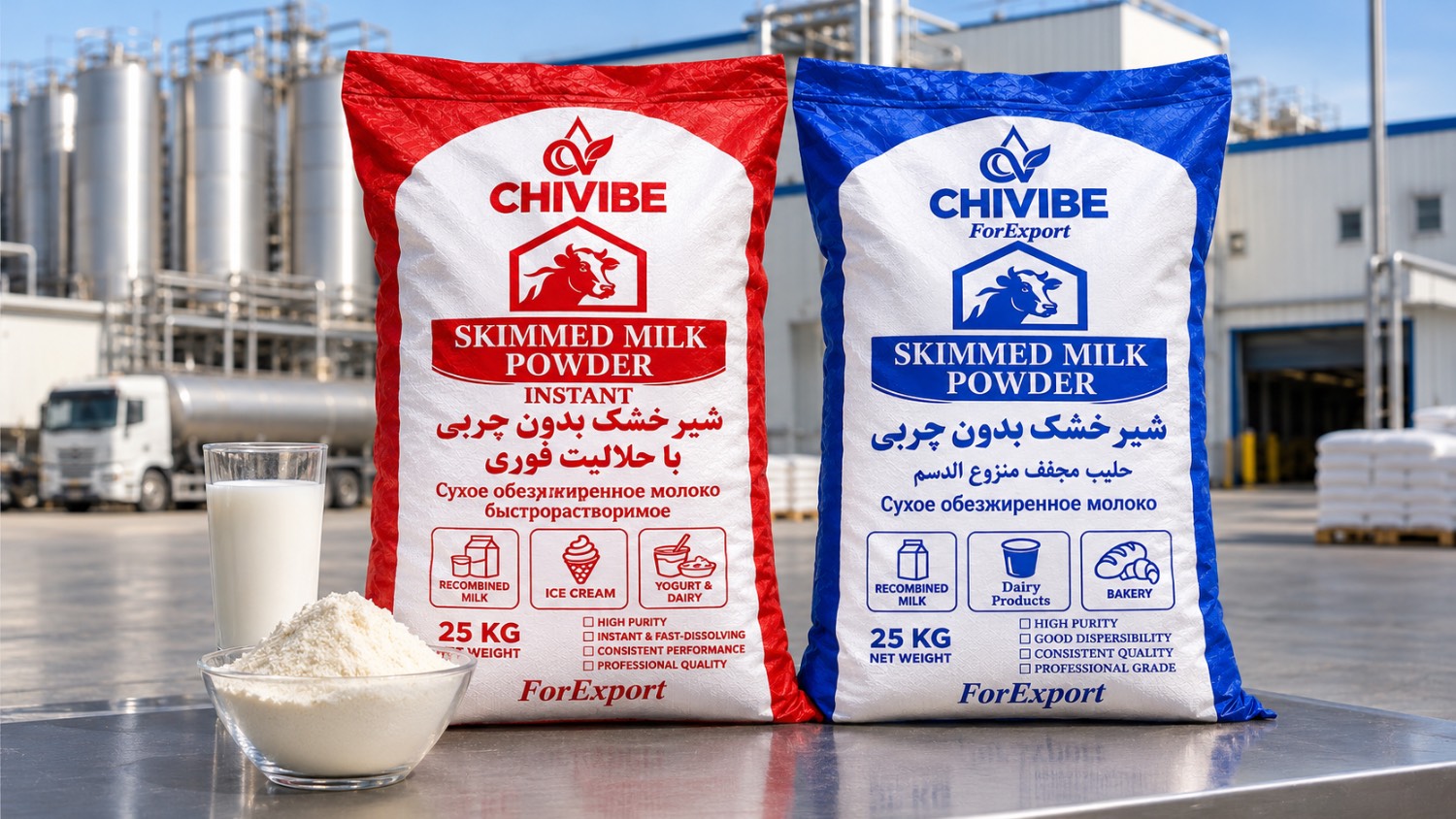
Using Skim Milk Powder in Fermented Dairy Manufacturing: Benefits, Applications & Industrial Solutions
Skim milk powder (SMP) is a valuable dairy ingredient for manufacturers seeking consistent texture, controlled milk solids, and efficient production of fermented dairy products. From yogurt and cultured milk to kefir and fermented dairy beverages, SMP helps processors standardize formulations and achieve repeatable product quality.
For industrial dairy manufacturers, selecting the right skim milk powder is not simply an ingredient-purchasing decision. It can influence protein content, viscosity, fermentation performance, production costs, and consumer acceptance.
In this guide, we explore how skim milk powder works in fermented dairy manufacturing, its technical advantages, practical processing considerations, and how to select suitable industrial milk powder for your production line.
What Is Skim Milk Powder?
Skim milk powder is manufactured by removing most of the fat and water from liquid milk, typically through separation, evaporation, and spray drying. The resulting ingredient contains concentrated milk solids, including proteins, lactose, and minerals, with a low fat content.
Its relatively long storage life, ease of transportation, and ability to be reconstituted make it particularly useful in industrial dairy manufacturing.
Why Is Skim Milk Powder Important in Fermented Dairy?
Fermented dairy products rely on interactions between milk proteins, starter cultures, acidity, and processing conditions. During fermentation, lactic acid bacteria convert lactose into lactic acid, reducing pH and promoting the formation of a protein gel.
By increasing the concentration of milk solids and proteins, skim milk powder can help manufacturers achieve a stronger gel structure, improved body, and reduced whey separation.
According to the Tetra Pak Dairy Processing Handbook, adding skim milk powder is one established method of standardizing dry matter in yogurt manufacturing.
Key Benefits of Using Skim Milk Powder in Fermented Dairy Manufacturing
1. Improved Yogurt Texture and Viscosity
Texture is one of the most important quality characteristics of fermented dairy products. Consumers expect yogurt to have a smooth, creamy, and consistent structure.
Skim milk powder increases milk solids-not-fat and protein concentration. Under suitable processing conditions, this can contribute to:
- Stronger yogurt gel formation
- Improved viscosity and mouthfeel
- Reduced syneresis or whey separation
- More consistent product texture
- Improved batch-to-batch uniformity
The final result depends on powder quality, protein concentration, heat treatment, homogenization, starter culture, and fermentation conditions.
2. Better Control of Milk Solids and Protein Content
Industrial dairy processors must maintain consistent product specifications despite natural variations in incoming milk composition.
Adding skim milk powder allows manufacturers to adjust milk solids and protein levels without relying exclusively on evaporation or membrane concentration.
This flexibility is particularly useful for producers of set yogurt, stirred yogurt, cultured dairy products, and selected high-protein formulations.
3. Greater Production Flexibility
Skim milk powder can be used to fortify fresh milk or to prepare reconstituted dairy bases, depending on the product and manufacturing system.
It provides an additional formulation option when fresh milk availability, seasonal composition, storage capacity, or transportation conditions create operational challenges.
For businesses evaluating dairy ingredients, explore our premium industrial milk powder products to identify options for your manufacturing requirements.
4. Potential Cost Optimization
Using skim milk powder can support cost management when evaluated against local fresh milk prices, processing requirements, energy consumption, storage costs, and ingredient availability.
Potential operational advantages include:
- Flexible ingredient purchasing and inventory planning
- Reduced dependence on seasonal fresh milk supply
- Convenient handling of concentrated dairy solids
- More predictable formulation standardization
- Opportunities to optimize total formulation costs
However, economic benefits should be confirmed through plant-specific calculations rather than assumed for every production facility.
Applications of Skim Milk Powder in Fermented Dairy Products
Skim Milk Powder in Yogurt Manufacturing
Yogurt is among the most established applications of skim milk powder. SMP is commonly used to increase the total solids content of the yogurt mix and support the development of a desirable protein network during fermentation.
Its use can be particularly beneficial when producing low-fat yogurt, where the absence of significant milk fat makes protein-based texture development especially important.
Skim Milk Powder in Greek-Style Yogurt
Greek-style and concentrated yogurts require careful protein and solids management to achieve a dense, creamy texture.
Depending on the product specification, skim milk powder may be incorporated into the initial milk formulation to increase solids before fermentation.
Manufacturers should distinguish between traditionally strained products and products formulated to achieve a Greek-style texture. Product naming and composition must comply with applicable market regulations.
Skim Milk Powder in Kefir and Cultured Milk
Kefir and other cultured milk beverages depend on controlled microbial fermentation. SMP can help standardize their milk base and adjust the concentration of dairy solids.
Because these products may require a drinkable consistency, excessive powder addition can produce undesirable thickness. Pilot testing is recommended to balance viscosity, acidity, flavor, and stability.
Skim Milk Powder in Fermented Dairy Beverages
For fermented dairy drinks, skim milk powder can provide additional protein and milk solids while supporting formulation flexibility.
Manufacturers must carefully control hydration, fermentation, mixing, and stabilization to achieve a smooth beverage with minimal sedimentation or phase separation.
How to Use Skim Milk Powder in Industrial Fermented Dairy Production
Successful SMP incorporation requires an integrated approach to formulation and processing.
Step 1: Select the Appropriate Powder
Evaluate the powder's protein content, moisture, microbiological quality, solubility, heat classification, and sensory properties.
Low-heat and medium-heat skim milk powders are commonly associated with cultured milk applications, although suitability depends on the complete manufacturing process.
Step 2: Calculate the Required Milk Solids
Determine the desired final protein and total solids levels before selecting an SMP addition rate.
As a formulation illustration, adding 3 kg of powder containing 96% total solids to a 100 kg final mix contributes approximately 2.88 kg of dry solids from that powder.
The appropriate dosage must be calculated using the original milk composition, target finished-product specifications, and relevant processing losses.
Step 3: Rehydrate and Disperse the Powder
Add SMP using suitable mixing equipment to minimize lump formation and ensure uniform dispersion.
Water quality, mixing intensity, temperature, and hydration time should be validated for the specific powder and production system.
Step 4: Apply Appropriate Heat Treatment
Heat treatment is essential for both microbiological control and yogurt texture development.
For conventional yogurt production, a treatment around 90–95°C for approximately five minutes is a recognized processing reference. Actual conditions must be validated for the equipment, recipe, and food safety plan.
Step 5: Inoculate and Control Fermentation
Cool the prepared milk base to the appropriate culture-inoculation temperature, add the selected starter culture, and monitor acidification.
Fermentation temperature, incubation time, and endpoint pH should follow the culture supplier's recommendations and the product specification.
Step 6: Cool, Package, and Verify Quality
After reaching the desired fermentation endpoint, cool the product according to the validated manufacturing process.
Check viscosity, acidity, whey separation, flavor, microbiological quality, and storage stability before commercial release.
How Much Skim Milk Powder Should Be Added to Yogurt?
There is no universal addition rate for all yogurt formulations. The correct quantity depends on the original milk solids, desired protein level, yogurt type, processing technology, and texture requirements.
Manufacturers may evaluate several trial addition levels during product development, such as 1%, 2%, and 3% of the final mix by weight. These values are experimental starting points, not universally recommended industrial dosages.
Each trial should be evaluated for:
- Total solids and protein concentration
- Viscosity and gel firmness
- Whey separation during storage
- Fermentation time and final acidity
- Flavor and sensory acceptance
- Ingredient cost per kilogram of finished product
Excessive solids enrichment may increase viscosity beyond the desired range or contribute to undesirable texture. Optimizing the formulation through pilot trials is essential.
Choosing the Right Industrial Skim Milk Powder Supplier
For commercial dairy manufacturers, reliable ingredient sourcing is critical to maintaining production consistency.
When evaluating a skim milk powder supplier, buyers should consider more than price alone.
Technical Specifications
Request a product specification sheet covering protein, fat, moisture, ash, solubility, heat classification, and relevant microbiological parameters.
Quality Assurance and Documentation
Verify the availability of batch-specific certificates of analysis, traceability information, allergen declarations, and applicable food safety documentation.
Consistency Across Shipments
Changes in ingredient composition or functionality can affect the behavior of fermented dairy products. Consistent raw material specifications help reduce formulation adjustments and quality variation.
Commercial and Logistics Requirements
Review packaging, minimum order quantity, lead time, shipping terms, destination-market requirements, and total landed cost before confirming an industrial order.
At Chivibe Farm, we invite industrial dairy buyers to explore our industrial milk powder product range and discuss the specifications required for their applications.
Skim Milk Powder vs. Whole Milk Powder in Fermented Dairy
Both skim milk powder and whole milk powder can be used in dairy formulations, but their nutritional composition and functional contributions differ.
| Factor | Skim Milk Powder | Whole Milk Powder |
|---|---|---|
| Fat Content | Low | Higher |
| Main Formulation Role | Milk solids and protein enrichment | Milk solids and milk fat enrichment |
| Low-Fat Yogurt | Often suitable | Less suitable without fat adjustment |
| Texture Contribution | Supports protein gel structure | Contributes fat and milk solids |
| Storage Considerations | Generally lower fat oxidation risk | Greater attention to fat oxidation |
The best option depends on the intended product, nutritional targets, processing conditions, and overall formulation economics.
Common Challenges When Using Skim Milk Powder
Powder Lumping
Insufficient mixing or unsuitable powder addition procedures can lead to incomplete dispersion. Appropriate powder induction systems and validated hydration conditions can improve consistency.
Excessive Yogurt Thickness
Too much added milk protein or total solids may create an overly firm or grainy product. Adjust the formulation based on instrumental and sensory testing.
Unexpected Fermentation Performance
Starter culture activity can be influenced by milk composition, heat treatment, inhibitors, and incubation conditions. Monitor acidification curves and investigate unexpected changes.
Whey Separation
Although SMP can help reduce syneresis, poor processing conditions, unsuitable protein balance, or excessive mechanical handling may still cause whey separation.
Effective quality control requires evaluating the complete process rather than relying on one ingredient to solve every texture or stability problem.
Why Industrial Dairy Buyers Should Consider Chivibe Farm
Choosing dairy ingredients requires balancing technical performance, commercial requirements, and dependable sourcing.
Chivibe Farm provides a starting point for businesses exploring industrial milk powder solutions for dairy and food manufacturing.
Whether your business is developing a new fermented dairy formulation, reviewing ingredient suppliers, or planning a bulk purchasing inquiry, our product information and contact channels can help you begin the sourcing process.
Explore our premium industrial milk powder products or contact the Chivibe Farm team to discuss product availability, technical specifications, packaging options, and commercial requirements.
For a more effective quotation request, include your target application, required powder specifications, estimated order volume, and destination country.
Frequently Asked Questions About Skim Milk Powder in Fermented Dairy
Can skim milk powder improve yogurt thickness?
Yes. By increasing milk solids and protein concentration, skim milk powder can improve yogurt gel firmness and viscosity when combined with suitable heat treatment and fermentation conditions.
Is skim milk powder suitable for low-fat yogurt?
Yes. Its low fat content and contribution to milk proteins make it useful for many low-fat yogurt formulations.
Does skim milk powder affect fermentation time?
It can influence fermentation behavior by changing milk composition and buffering characteristics. The effect depends on the formulation, starter culture, and processing conditions.
Can skim milk powder replace fresh milk?
Skim milk powder can be reconstituted with water to create a skim milk base. However, the suitability of reconstituted milk depends on the finished product, process design, and applicable food regulations.
Which skim milk powder heat classification is suitable for cultured dairy?
Low-heat and medium-heat powders are commonly used for cultured milk applications. The optimal choice should be confirmed through technical specifications and production trials.
Where can manufacturers inquire about industrial milk powder?
Manufacturers can review Chivibe Farm's industrial milk powder products and submit a purchasing or technical inquiry through the contact page.
Conclusion: Optimizing Fermented Dairy Production with Skim Milk Powder
Using skim milk powder in fermented dairy manufacturing offers important formulation and processing advantages. It can help standardize milk solids, improve yogurt texture, support protein enrichment, and provide greater flexibility in dairy ingredient sourcing.
However, successful results depend on choosing the right powder, validating processing conditions, and maintaining effective quality control throughout production.
For dairy manufacturers and industrial ingredient buyers, working with a suitable supplier is an important part of achieving consistent product quality and efficient purchasing.
Looking for industrial milk powder for your next dairy production project? Explore Chivibe Farm's milk powder products and contact us for product and bulk-order inquiries.
Technical References and Further Reading
For additional technical information on dairy processing, milk powder selection, and fermented dairy production, consult the following industry resources:
- Tetra Pak – Fermented Milk Products
- Tetra Pak – Recombined Milk Products
- FAO – Dairy Production and Products
Technical note: Ingredient performance varies by supplier, product specification, and processing conditions. Manufacturers should validate formulations and comply with applicable food safety and labeling regulations.