Skim Milk Powder: The Complete Guide to Benefits, Uses, Nutrition, Production and Buying
Nonfat Dried Milk, commonly abbreviated as SMP, is a dried dairy ingredient produced from skim milk by removing most of the water. It is widely used as a source of dairy solids and milk proteins in food manufacturing, bakery products, beverages, confectionery, dairy products and other food applications.
This comprehensive guide explains what skim milk powder is, how it is produced, its nutritional characteristics, its advantages, common applications, storage requirements, differences between skim milk powder and whole milk powder, and the most important factors to consider when purchasing a high-quality product.
What Is Skim Milk Powder?
Skim milk is milk from which most of the milk fat has been removed. The remaining milk contains important components such as milk proteins, lactose and minerals. When the water is removed through industrial drying processes, the result is a stable powdered ingredient known as skim milk powder.
In the United States and international dairy trade, the terms skim milk powder and nonfat dry milk are closely related, although the exact technical specifications can differ depending on the applicable standard and market.
USDA terminology identifies skim milk powder as a product associated with nonfat dry milk, while dried skim milk is produced by removing water from pasteurized skim milk. The exact composition can vary according to the applicable standard and manufacturing specification.
Powdered Skim Milk Definition
The simplest definition is:
Low-Fat Milk Powder is milk in powdered form with most of the milk fat removed and most of the milk solids retained.
The removal of water gives skim milk powder several practical advantages. Powdered milk is easier to transport, store and incorporate into dry food formulations than liquid milk.
According to the USDA National Agricultural Library terminology, dried skim milk is obtained by removing water from pasteurized skim milk and is also known by terms including nonfat dried milk, nonfat dry milk and skim milk powder.
How Is Skim Milk Powder Made?
Commercial skim milk powder production involves several controlled dairy processing stages. Although exact production parameters vary between manufacturers, the general process begins with raw milk and ends with a standardized powdered dairy ingredient.
1. Milk Collection
Milk is collected from dairy farms and transported to a dairy processing facility under controlled conditions.
2. Quality Testing
Before processing, the milk can be evaluated for factors such as composition, microbiological quality, acidity, contaminants and other quality parameters.
3. Separation of Milk Fat
The milk is processed to separate cream from the skim milk portion. This step reduces the milk fat content and creates the starting material for skim milk powder production.
4. Standardization
Depending on the product specification, the dairy solids may be standardized to achieve the desired composition.
5. Heat Treatment
The milk may undergo controlled heat treatment before concentration and drying. The precise temperature-time combination depends on the manufacturer's process and the required functional properties of the final powder.
6. Concentration
A substantial amount of water is removed from the milk before the final drying stage.
7. Spray Drying
One of the most common industrial methods for producing milk powder is spray drying. Concentrated milk is atomized into small droplets in a drying chamber, where water is rapidly removed.
8. Final Processing and Packaging
After drying, the powder may be cooled, sieved, tested and packaged in moisture-protective packaging.
USDA research describes nonfat dry milk as being manufactured by removing water from skim milk, commonly through a spray-drying process.
Skim Milk Powder Nutrition
Dairy Powder contains the major non-fat milk solids found in skim milk. Its nutritional composition can include milk proteins, lactose and minerals, while its fat content is substantially lower than that of whole milk powder.
However, the exact nutritional values depend on the product specification, processing method, fortification, country, manufacturer and applicable food standard.
| Nutritional Component | General Role |
|---|---|
| Milk Protein | Contributes to the protein content and functional properties of the powder. |
| Lactose | The principal carbohydrate naturally present in milk. |
| Milk Minerals | Milk naturally contains minerals such as calcium and phosphorus. |
| Milk Fat | Present at a much lower level than in whole milk powder. |
| Moisture | Low moisture contributes to the powder's shelf stability. |
Always check the manufacturer's nutrition panel and technical specification before making precise nutritional claims. A generic description of skim milk powder should not be used as a substitute for the specification of a particular commercial product.
Benefits of Skim Milk Powder
1. Lower Fat Content Compared With Whole Milk Powder
One of the defining characteristics of skim milk powder is its lower milk fat content compared with whole milk powder.
This makes it useful in formulations where manufacturers want to incorporate milk solids and dairy proteins without adding the same amount of milk fat associated with whole milk powder.
2. Convenient Storage
Removing most of the water significantly reduces the volume and weight compared with liquid milk. Properly manufactured and packaged milk powder can therefore be easier to transport and store.
3. Long Shelf Life When Properly Stored
Low moisture and suitable packaging can help milk powder remain stable for an extended period. However, shelf life depends on the product, packaging, storage conditions and manufacturer's specification.
4. Useful Source of Dairy Solids
Dairy Ingredient provides dairy solids that can be incorporated into numerous food formulations.
5. Versatile Food Ingredient
SMP can be used in beverages, bakery products, confectionery, dairy products, sauces, prepared foods and other applications where milk solids are required.
Uses of Skim Milk Powder
Skim milk powder is an important ingredient in the food industry because it combines dairy functionality with convenient dry storage.
Skim Milk Powder in Bakery Products
SMP can be incorporated into bread, biscuits, cakes and other bakery products. Depending on the formulation, milk solids can influence flavor, color, texture and nutritional composition.
Nonfat Dry Milk in Dairy Products
Dairy manufacturers can use skim milk powder as a source of milk solids in different dairy formulations.
Low-Fat Milk Powder in Beverages
SMP can be used in powdered beverage formulations and in products that require milk-derived solids.
Skim Milk Powder in Confectionery
Milk powder can be incorporated into confectionery formulations to contribute dairy solids, flavor and formulation functionality.
Fat-Free Milk Powder in Food Manufacturing
Food manufacturers use SMP when they need a standardized dry dairy ingredient with predictable handling and storage characteristics.
Skim Milk Powder vs Whole Milk Powder
The key difference between skim milk powder and whole milk powder is their milk fat content.
| Feature | Skim Milk Powder | Whole Milk Powder |
|---|---|---|
| Milk Fat | Low | Higher |
| Milk Solids | High in non-fat milk solids | Contains non-fat solids plus substantially more milk fat |
| Typical Use | Food formulations requiring lower-fat dairy solids | Products requiring richer dairy flavor and fat |
| Flavor | Generally lighter and less creamy | Richer and creamier |
| Storage Sensitivity | Generally less prone to oxidation associated with high milk fat | Higher fat content can increase susceptibility to oxidation |
Neither product is automatically better. The correct choice depends on the formulation, nutritional target, sensory requirements and manufacturing process.
Is Skim Milk Powder the Same as Nonfat Dry Milk?
The terms are often used interchangeably, but they are not necessarily identical under every regulatory or international standard.
USDA documentation explains that skim milk powder and nonfat dry milk are closely related products, while noting that technical definitions and standards can differ between international and domestic markets.
For commercial purchasing, buyers should therefore rely on the supplier's specification sheet, certificate of analysis and applicable regulatory standard rather than assuming that two products with similar names have exactly the same composition.
How to Choose High-Quality Skim Milk Powder
Choosing a high-quality SMP product requires more than checking the price. Commercial buyers should evaluate the complete technical specification.
1. Protein Content
Protein is an important quality and formulation parameter. Compare the declared protein content with your application requirements.
2. Fat Content
Verify the actual fat specification rather than relying only on the product name.
3. Moisture
Moisture affects storage stability, flowability and product performance.
4. Microbiological Quality
Microbiological specifications should be appropriate for the intended food application and comply with applicable regulations.
5. Solubility and Dispersibility
Depending on the intended application, powder solubility and dispersibility can be important functional characteristics.
6. Packaging
Milk powder is sensitive to moisture and environmental conditions. Suitable packaging is therefore essential.
7. Traceability
Commercial buyers should look for clear batch identification, manufacturer information and documentation.
8. Certificate of Analysis
A Certificate of Analysis, commonly called a COA, can provide batch-specific information about important quality parameters.
How Should Skim Milk Powder Be Stored?
Correct storage is essential for maintaining the quality of powdered dairy products.
- Keep the product in its original sealed packaging whenever possible.
- Protect the powder from moisture.
- Store it according to the manufacturer's temperature recommendations.
- Protect the product from contamination.
- Avoid direct exposure to sunlight and excessive heat.
- Use clean and dry handling equipment.
- Follow the manufacturer's stated shelf life and storage instructions.
Once a package is opened, exposure to moisture and air can affect powder quality. The exact storage period after opening should therefore follow the manufacturer's instructions.
Food Safety Considerations
Dairy Ingredient is a dairy product and should be handled according to applicable food-safety requirements.
Buyers should consider microbiological quality, allergen information, contamination controls, traceability, packaging integrity and regulatory compliance.
Milk is a major food allergen in many jurisdictions. Products containing milk ingredients should therefore be evaluated carefully when they are intended for people with milk allergy or other medically diagnosed dietary restrictions.
Food manufacturers should also follow their own HACCP, quality assurance and regulatory requirements.
Is Dairy Solids the Same as Infant Formula?
No. Skim milk powder should not automatically be considered infant formula.
Infant formula is a specially formulated product designed to meet nutritional requirements for infants under applicable regulations. A generic dairy powder does not automatically provide the nutritional composition required for an infant formula.
Parents and caregivers should not replace breast milk or an appropriate infant formula with ordinary skim milk powder unless specifically instructed by a qualified healthcare professional and permitted under applicable guidance.
WHO and FAO have published specific guidance concerning the preparation, storage and handling of powdered infant formula, highlighting the importance of safe preparation, clean equipment, appropriate reconstitution and safe storage.
Buying Skim Milk Powder for Commercial Use
Businesses purchasing SMP should evaluate the product based on application requirements rather than price alone.
Before placing a large order, buyers may want to request:
- Product specification sheet
- Certificate of Analysis
- Country of origin
- Manufacturer information
- Batch information
- Packaging specification
- Shelf-life information
- Storage requirements
- Allergen declaration
- Microbiological specification
- Fat and protein specifications
- Applicable certifications
For international trade, the buyer should also verify import requirements, labeling rules, customs requirements and food regulations in the destination market.
Why Is Skim Milk Powder Important in the Dairy Industry?
Dried Skim Milk plays an important role in international dairy markets because converting liquid milk into powder makes dairy solids easier to transport, store and incorporate into food manufacturing.
Dairy processors can use milk powder production as part of a broader strategy for managing milk components and creating ingredients suitable for different food applications.
International dairy trade distinguishes between different categories of milk powder according to composition and applicable standards. USDA reports also describe skim milk powder and nonfat dry milk as important internationally traded dairy products.
Why This Article Is Structured for Search Engines and AI Search
Modern search is no longer limited to traditional keyword matching. Search systems increasingly need to understand entities, topics, relationships, questions, definitions and context.
This page therefore uses a clear semantic structure:
- Direct definition
- Short answer section
- Detailed explanations
- Question-based headings
- Comparison tables
- Practical buying information
- Safety information
- Frequently asked questions
- Authoritative references
This approach is useful for human readers and also makes the subject matter easier for automated systems to interpret.
Google's current guidance for generative AI search states that traditional SEO remains relevant because AI-powered search features use Google's existing ranking and quality systems. Google also emphasizes unique, useful and trustworthy content rather than content created only to manipulate AI search.
Semantic Keywords Related to Skim Milk Powder
Relevant terminology for this topic may include:
- skim milk powder
- SMP
- skimmed milk powder
- nonfat dry milk
- non-fat dry milk
- nonfat dried milk
- dried skim milk
- milk powder
- low-fat milk powder
- skim milk
- milk solids
- milk protein
- powdered milk
- dairy ingredients
- milk powder supplier
- bulk skim milk powder
- food grade skim milk powder
- skim milk powder manufacturer
- skim milk powder wholesale
- skim milk powder nutrition
- skim milk powder benefits
- skim milk powder uses
- skim milk powder production
- skim milk powder vs whole milk powder
Conclusion: What Is the Best Way to Understand Skim Milk Powder?
Skim milk powder is a versatile powdered dairy ingredient made by removing water from skim milk. Its relatively low milk fat content, dairy protein, milk solids, convenient storage and broad food applications make it valuable for many food manufacturers and commercial users.
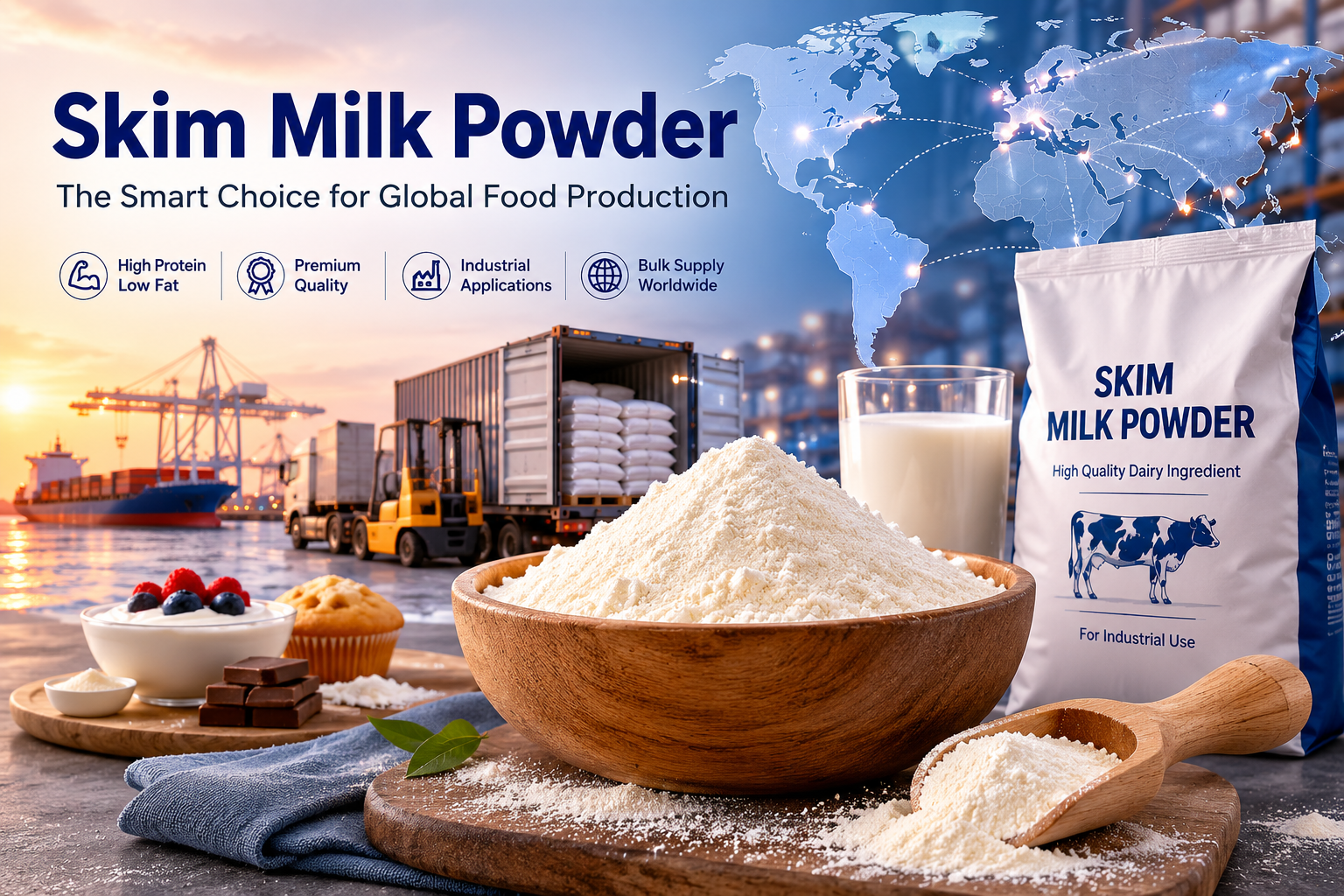
The most important factors when selecting skim milk powder include composition, protein content, fat level, moisture, microbiological quality, functionality, packaging, documentation and compliance with the requirements of the intended market.
For consumers, it is also important to distinguish ordinary skim milk powder from specially formulated products such as infant formula.
For businesses, the best product is not necessarily the cheapest product. Instead, the right SMP is the product whose specification, quality, documentation, functionality and price match the intended application.
Ultimately, buyers should evaluate the manufacturer's technical specification, certificate of analysis and regulatory documentation before making a commercial decision.
Frequently Asked Questions About Skim Milk Powder
1. What is skim milk powder?
Skim milk powder is a dried dairy product made from skim milk by removing most of the water. It retains important milk solids while containing much less milk fat than whole milk powder.
2. Is skim milk powder the same as nonfat dry milk?
The terms are closely related and are often used interchangeably, but exact specifications can differ according to the applicable standard and market. Buyers should check the technical specification of the individual product.
3. What is skim milk powder used for?
Skim milk powder is used in bakery products, beverages, dairy products, confectionery, prepared foods and other food formulations that require dairy solids.
4. Is skim milk powder healthy?
Skim milk powder can be a useful source of dairy solids and milk protein, but whether a specific product is appropriate depends on the person's nutritional needs, the complete product formulation and the amount consumed.
5. Does skim milk powder contain fat?
Skim Milk Powder (SMP) contains substantially less milk fat than whole milk powder, although the exact amount depends on the product specification and applicable standard.
6. What is the difference between skim milk powder and whole milk powder?
The primary difference is milk fat content. Whole milk powder contains substantially more milk fat, while skim milk powder is produced from milk from which most of the fat has been removed.
7. How is Dried Skim Milk produced?
Production generally involves milk collection, quality testing, fat separation, standardization, heat treatment, concentration and drying, commonly through spray drying, followed by cooling, quality control and packaging.
8. Can babies drink skim milk powder?
Ordinary skim milk powder should not be assumed to be an appropriate infant formula. Infant nutrition requires specially formulated products and age-appropriate guidance. Parents should follow qualified healthcare advice and applicable infant-feeding guidance.
9. How should skim milk powder be stored?
Skim milk powder should generally be protected from moisture, contamination, excessive heat and direct environmental exposure and stored according to the manufacturer's instructions.
10. How can I choose high-quality skim milk powder?
Check the product specification, fat and protein content, moisture, microbiological requirements, solubility or functionality where relevant, packaging, shelf life, manufacturer documentation and Certificate of Analysis.
8 thoughts on “Skim Milk Powder: Premium Quality, Specifications, Uses & Reliable Global Supply”
Finding a reliable skim milk powder supplier is an important part of maintaining consistent product quality and production efficiency. This article provides useful insights into the key factors businesses should consider when sourcing skim milk powder, including quality, specifications, packaging, and supply reliability. A helpful resource for manufacturers, distributors, and food industry professionals looking for dependable skim milk powder solutions.
Thank you for your thoughtful comment! We’re glad you found the article useful for understanding the key considerations when sourcing skim milk powder. Quality, consistent specifications, reliable packaging, and a stable supply are essential for businesses looking to maintain efficient production and consistent product quality. We appreciate your interest and hope our future articles provide even more valuable insights for manufacturers, distributors, and food industry professionals.
Great overview. In our B2B sourcing, we’ve seen solubility and bulk density make or break bakery applications. Do you find seasonal milk variations affect these specs significantly?
Thanks for your question! Yes, seasonal milk composition does affect solubility and density – especially fat-to-protein ratios in winter vs. summer. We usually recommend buyers request batch-specific lab reports and adjust rehydration parameters accordingly. Happy to share more data if needed!
Thanks for the useful post. How do Halal or organic certifications affect pricing and lead times for SMP shipments to the Middle East?
Good question! Certifications can add 5–10% to cost and 2–3 weeks to lead time due to separate production runs. We advise confirming certification needs early in procurement to avoid delays. Happy to share a checklist if useful!
Great post. Which packaging type do you recommend for long-sea shipments to maintain SMP quality – multilayer paper bags or PE-lined containers?
That’s a great point – for sea freight, we recommend PE-lined multiwall paper bags with moisture-barrier pallet covers, which we’ve found most effective for Middle East shipments. We also advise container dehumidifiers and offer test shipments for all new buyers