
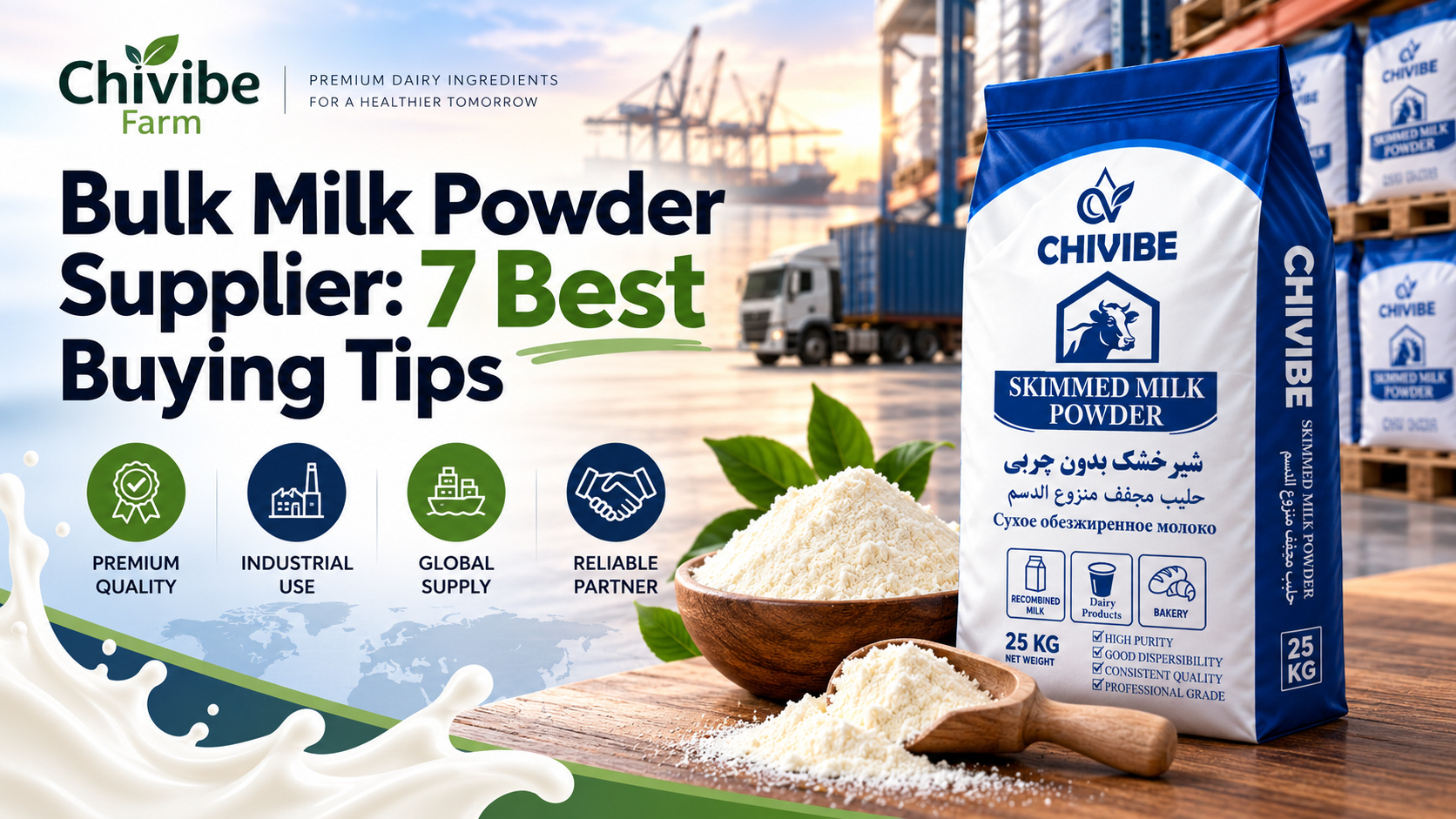
INDUSTRIAL DAIRY INGREDIENTS | B2B SOURCING GUIDE
Bulk Milk Powder Supplier: 7 Essential Tips for Choosing Premium Industrial Milk Powder
Choosing the right bulk milk powder supplier is an important purchasing decision for food manufacturers, dairy processors, commercial bakeries, confectionery producers, and international ingredient distributors.
Product specifications, manufacturing standards, packaging, documentation, logistics, and commercial terms can all influence the success of a bulk dairy ingredient purchase.
In this comprehensive buying guide, Chivibe Farm explains seven essential considerations for sourcing industrial milk powder and selecting a supplier that meets your production requirements.
What Is Industrial Milk Powder and Why Is It Important?
Industrial milk powder is a dehydrated dairy ingredient used in a wide range of food manufacturing processes. Removing much of the water from milk creates a concentrated powder that can be stored, transported, measured, and incorporated into industrial recipes.
Milk powder can contribute dairy solids, proteins, lactose, minerals, flavor, and functional properties to finished food products. Its suitability depends on the specific powder grade, processing characteristics, and formulation.
Common Industrial Applications
- Bakery products and bread formulations
- Biscuits, cookies, and confectionery
- Chocolate and dairy-based fillings
- Ice cream and frozen desserts
- Yogurt and fermented dairy products
- Recombined dairy beverages
- Instant beverage mixes
- Prepared foods and dry ingredient blends
For companies purchasing dairy ingredients in commercial quantities, selecting the right powder is as important as choosing the right supplier.
Explore our premium industrial milk powder products to learn more about the industrial dairy ingredient categories available through Chivibe Farm.
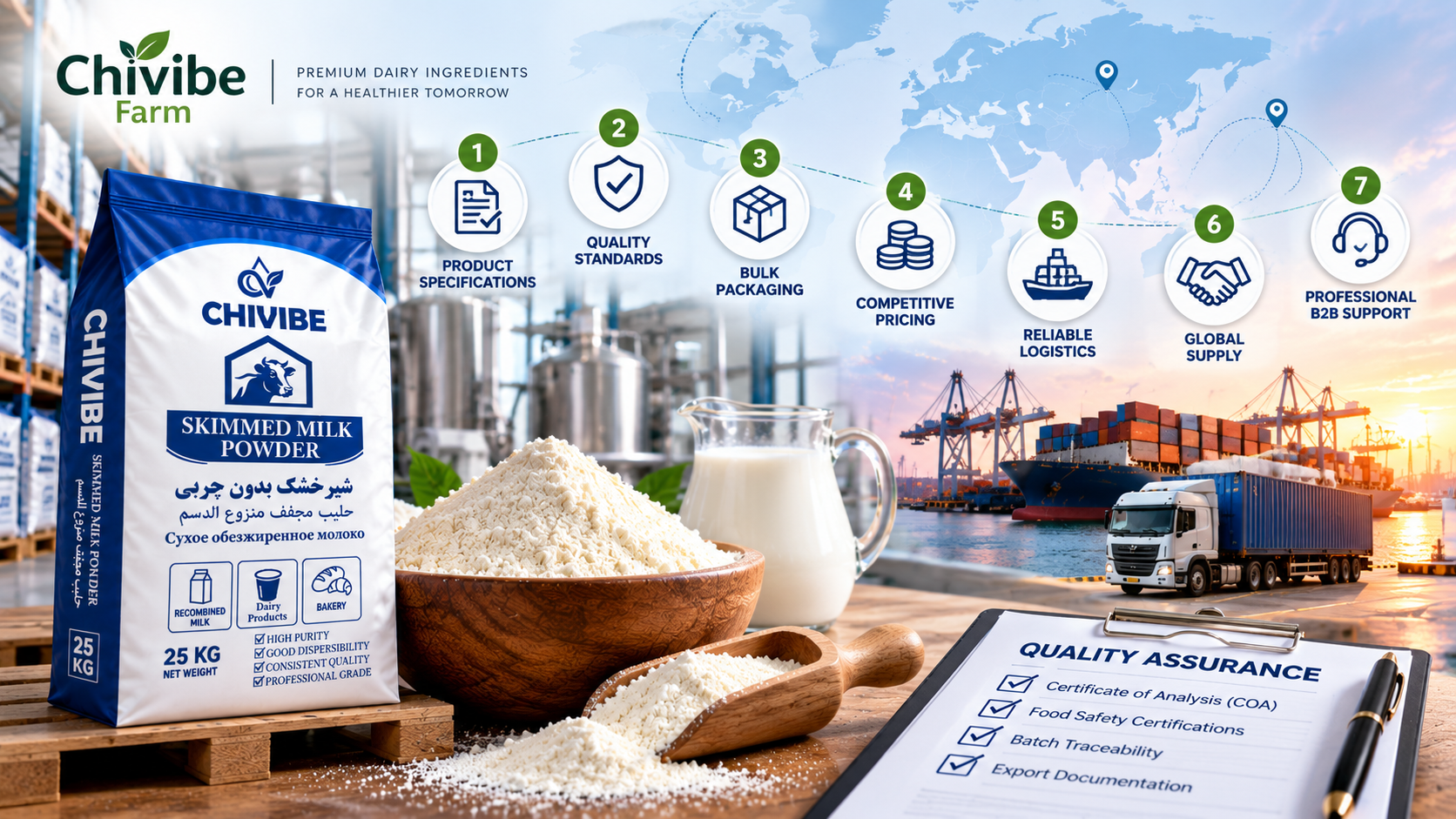
1. Choose a Bulk Milk Powder Supplier With Clear Product Specifications
The first step in selecting a bulk milk powder supplier is understanding exactly which product specifications your manufacturing process requires.
Different milk powder grades can vary in composition, physical characteristics, and functional performance. A product suitable for one application may not perform identically in another.
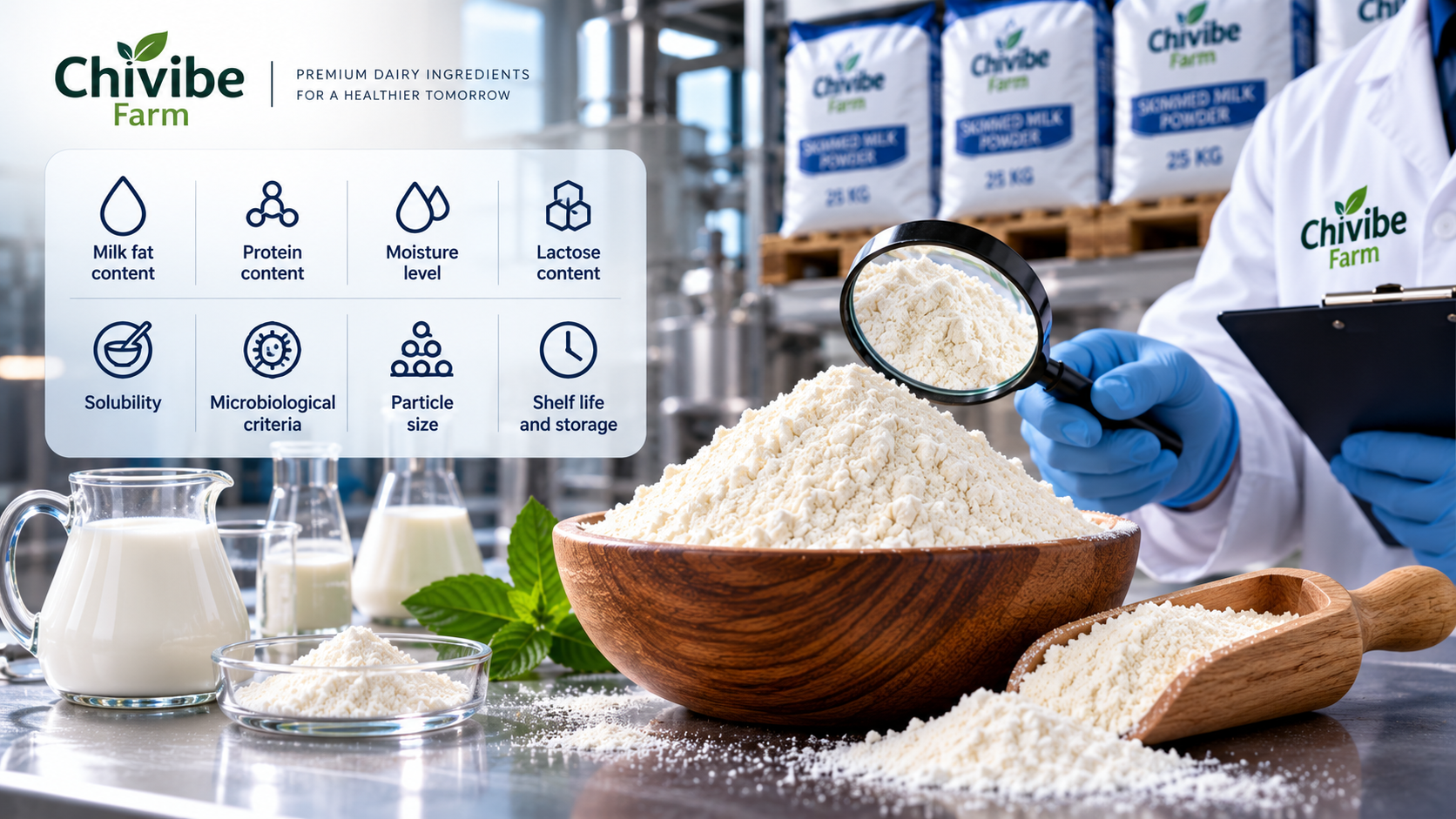
Important Specifications to Review
- Milk fat content
- Protein content
- Moisture level
- Lactose content
- Solubility and dispersibility
- Microbiological criteria
- Particle characteristics
- Shelf life and storage conditions
Buyers should request the relevant technical data sheet and confirm that the offered grade matches their formulation requirements.
When applicable, a batch-specific Certificate of Analysis (COA) can help verify that delivered products meet agreed specifications.
2. Compare Skimmed Milk Powder and Whole Milk Powder
Understanding the differences between skimmed milk powder (SMP) and whole milk powder (WMP) helps industrial buyers choose a suitable dairy ingredient.
Skimmed Milk Powder (SMP)
Skimmed milk powder is produced from milk from which most of the fat has been removed. It is commonly used when manufacturers need milk solids with relatively low fat content.
SMP may be used in bakery products, confectionery, dairy formulations, and various processed food applications.
For more detailed sourcing information, visit our dedicated skimmed milk powder supplier page.
Whole Milk Powder (WMP)
Whole milk powder retains a higher proportion of milk fat and may be selected for applications requiring richer dairy flavor and fat contribution.
It is commonly considered for chocolate, confectionery, dairy beverages, and other fat-containing food formulations.
| Feature | Skimmed Milk Powder | Whole Milk Powder |
|---|---|---|
| Milk fat | Low | Higher |
| Primary contribution | Non-fat milk solids | Milk solids and milk fat |
| Typical applications | Bakery, dairy, dry mixes | Chocolate, beverages, desserts |
| Flavor profile | Milder dairy profile | Richer dairy profile |
| Storage considerations | Protect from moisture | Protect from moisture and oxidation |
Exact composition and performance depend on the individual product grade. Always refer to the supplier's technical documentation rather than assuming that all SMP or WMP products have identical properties.
3. Verify Quality Standards and Product Documentation
Quality assurance is a major consideration when purchasing milk powder for industrial use.
Professional buyers should evaluate the quality management procedures and supporting documentation relevant to the product and its manufacturing origin.
Documentation to Request
- Product technical data sheet
- Certificate of Analysis, where applicable
- Ingredient and allergen information
- Country-of-origin documentation
- Manufacturing and expiry dates
- Batch identification details
- Relevant food safety certifications
- Export documentation, where required
Depending on the country and intended application, buyers may also need to evaluate requirements related to food safety systems, import regulations, labeling, and dairy product standards.
Recognized food safety management frameworks, including HACCP-based systems and applicable certification programs, can form part of a supplier qualification process.
However, buyers should independently verify any certification claims and confirm that the documents apply to the actual manufacturer, facility, and product being supplied.
4. Evaluate Bulk Packaging, Storage, and Shelf Life
Packaging has a direct impact on the protection and handling of industrial dairy ingredients.
Milk powder is sensitive to moisture exposure and should be protected from unsuitable storage and transportation conditions.
Common Bulk Packaging Considerations
- Bag weight and packaging format
- Food-grade inner liners
- Bag sealing integrity
- Palletization requirements
- Container loading conditions
- Batch labeling and traceability
- Storage temperature and humidity
Industrial milk powder is frequently traded in 25 kg bags, although packaging options vary by manufacturer and product.
Buyers should confirm the exact packaging configuration offered for their order before purchasing.
For storage, follow the manufacturer's product-specific instructions and maintain appropriate warehouse conditions.
Products should be protected from water, direct contamination, excessive heat, and conditions that may affect quality.
5. Understand Wholesale Pricing and International Trade Terms
The commercial cost of industrial milk powder involves more than the quoted price per kilogram or metric ton.
International buyers should evaluate the full purchasing cost and the responsibilities associated with transportation, insurance, customs, and delivery.
Factors Affecting Bulk Milk Powder Pricing
- Milk powder type and grade
- Product specifications
- Order quantity
- Packaging configuration
- Country of origin
- Freight and logistics costs
- Currency and payment conditions
- Market supply and demand
Buyers should also clarify the Incoterms used in the commercial quotation.
Terms such as EXW, FOB, CFR, and CIF define different responsibilities and cost allocations between buyers and sellers.
A clear written quotation should identify the product, quantity, packaging, delivery terms, quotation validity, and payment conditions.
Request a Bulk Milk Powder Quotation
Contact Chivibe Farm to discuss your product requirements, target quantity, destination, and preferred trade terms.
Request a Wholesale Quote on WhatsApp6. Review Export Logistics and Supply Chain Requirements
Reliable logistics planning is an essential part of international dairy ingredient sourcing.
For buyers purchasing milk powder across borders, the shipping process should be coordinated with the applicable import and export requirements.
Key Logistics Questions
- What is the estimated production or preparation lead time?
- Which packaging and pallet formats are available?
- What is the proposed shipment method?
- Which shipping documents will be provided?
- What import requirements apply at destination?
- How will product batches be identified?
- What procedures apply if delivery issues arise?
International trade requirements can vary significantly between countries and product categories.
Importers should verify the relevant food regulations, customs requirements, labeling rules, and sanitary documentation before confirming an order.
For additional information about dairy ingredient sourcing, you can also explore dairy powder supplier information from JTB Plus .
Comparing relevant supplier information and documentation can help procurement teams make more informed purchasing decisions.
7. Select a Supplier With Clear Communication and B2B Support
The final consideration is the quality of communication throughout the purchasing process.
A suitable bulk milk powder supplier should be able to discuss product specifications, commercial requirements, documentation, and logistics in a clear and organized manner.
What Professional Buyers Should Expect
- Clear product identification
- Transparent quotations
- Written specification confirmation
- Defined payment conditions
- Realistic delivery planning
- Accessible commercial communication
- Documented order requirements
When evaluating potential business partners, buyers should prioritize suppliers whose products and commercial processes match their needs.
Chivibe Farm provides an inquiry channel for businesses interested in discussing industrial milk powder sourcing requirements.
Buyers can use the contact link below to submit their product specifications and request commercial information.
Bulk Milk Powder Supplier Evaluation Checklist
Before placing an industrial milk powder order, use this practical procurement checklist.
| Evaluation Area | What to Confirm |
|---|---|
| Product type | SMP, WMP, or another required grade |
| Specifications | Fat, protein, moisture, and functional requirements |
| Quality documents | Relevant specifications and batch documentation |
| Packaging | Bag size, liner, labeling, and palletization |
| Commercial terms | Price, currency, payment, and Incoterms |
| Logistics | Lead time, shipment method, and destination |
| Supplier communication | Clear responses and written confirmation |
Explore Industrial Milk Powder Sourcing With Chivibe Farm
Chivibe Farm is a commercial contact point for buyers exploring industrial dairy ingredient sourcing.
Whether you are evaluating skimmed milk powder for food manufacturing or comparing industrial dairy powder options, it is important to begin with clearly defined product and purchasing requirements.
Explore Our Dairy Ingredient Pages
Visit our industrial milk powder product page for additional product information.
For inquiries specifically related to skimmed milk powder, explore our skimmed milk powder sourcing page .
To request a quotation, prepare the following details: required powder type, technical specifications, estimated quantity, destination country, and preferred delivery terms.
Looking for a Bulk Milk Powder Supplier?
Send your industrial dairy ingredient requirements to Chivibe Farm and request product and commercial information.
Contact Chivibe Farm on WhatsAppFrequently Asked Questions About Bulk Milk Powder Suppliers
What should I look for in a bulk milk powder supplier?
Look for clear product specifications, appropriate quality documentation, batch traceability, suitable packaging, transparent commercial terms, and reliable communication. The supplier should be able to address your manufacturing and purchasing requirements.
What is the difference between skimmed milk powder and whole milk powder?
Skimmed milk powder contains relatively little milk fat, while whole milk powder retains a higher fat content. The appropriate choice depends on the desired nutritional, flavor, and functional properties of the finished product.
Is industrial milk powder suitable for bakery manufacturing?
Yes. Suitable milk powder grades are commonly used in industrial bakery formulations. The required grade depends on the recipe, processing conditions, and desired product characteristics.
What packaging is used for wholesale milk powder?
Industrial milk powder is commonly supplied in bulk bags, including 25 kg formats. Exact packaging depends on the manufacturer, product grade, and commercial agreement.
What documents should buyers request before importing milk powder?
Buyers should request relevant technical specifications, quality documentation, batch details, origin information, and any documents required under the destination country's import regulations.
How can I request a bulk milk powder quotation from Chivibe Farm?
You can contact Chivibe Farm through WhatsApp and provide your required product type, specifications, quantity, destination, and preferred trade terms.
Final Thoughts: Choose the Right Bulk Milk Powder Supplier
Selecting the right bulk milk powder supplier requires more than comparing wholesale prices.
Technical specifications, quality documentation, packaging, logistics, commercial conditions, and supplier communication should all be considered before purchasing.
By following these seven essential buying tips, food manufacturers and ingredient distributors can make more informed industrial milk powder sourcing decisions.
Explore the dairy ingredient information available through Chivibe Farm and contact the commercial team to discuss your purchasing needs.
Start Your Industrial Milk Powder Inquiry
Tell us what type of milk powder you need and share your commercial requirements.
Get a Quote via WhatsApp